
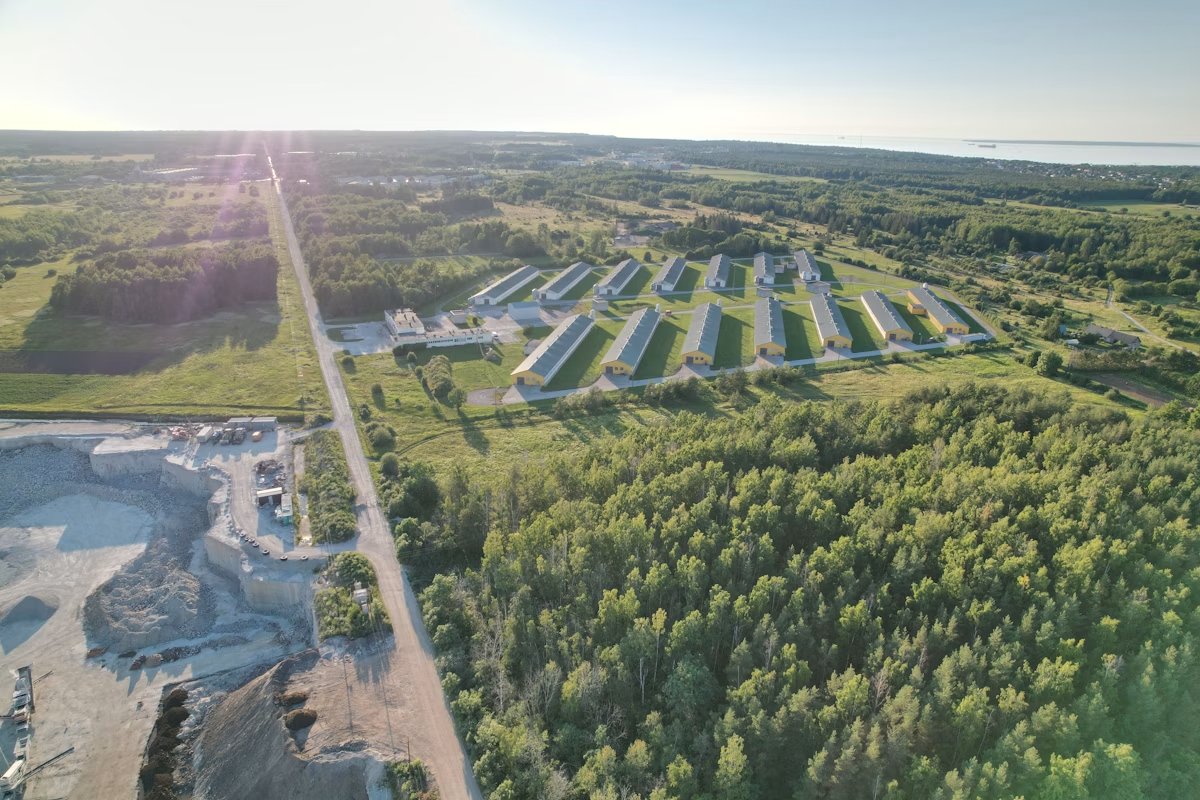
Selecting industrial land is not only a property decision. It is a long-term operational decision that can influence approvals, transportation, workforce access, project timelines and future expansion.
A site may appear commercially attractive but still create challenges during documentation, construction or production. A structured evaluation process helps identify these risks before significant time and capital are committed.
Start With a Clear Project Requirement
Before reviewing available land, define what the project actually requires. The right location for a warehouse may not be suitable for a manufacturing plant, processing facility or large industrial unit.
Your requirement should cover the present operational need as well as the possible future direction of the business.
Define the core project requirements
- Required land area, built-up space and open operational area.
- Type of manufacturing or industrial activity.
- Utility requirements such as power, water and drainage.
- Internal movement, parking and material-handling requirements.
- Possible future expansion of the facility.
Evaluate the Location Beyond the Land Price
Land cost is only one part of the investment. A lower purchase price can become expensive when the site has limited road access, poor infrastructure or greater approval complexity.
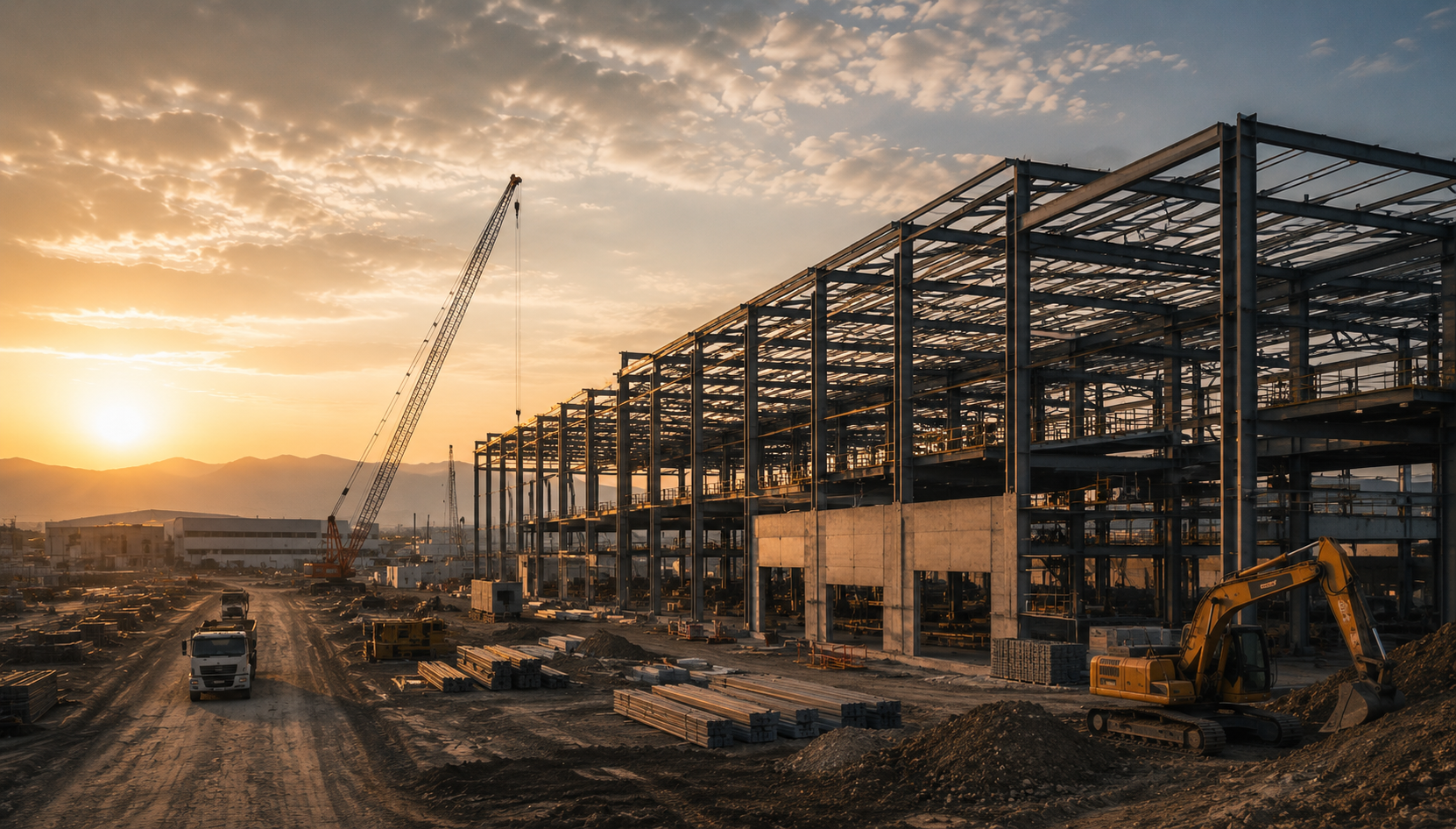
Important location considerations
- Connectivity to highways, ports, railway networks and commercial centres.
- Availability of electricity, water, drainage and communication infrastructure.
- Access to labour, vendors, raw materials and supporting industrial services.
- Distance from residential areas and sensitive development zones.
- Movement conditions for commercial and heavy vehicles.
Verify Ownership and Documentation
Documentation should be reviewed before a final commercial commitment. Ownership records, title clarity, land classification, access rights and existing liabilities can directly affect the transaction.
Legal and technical verification should happen during the evaluation stage so that unsuitable opportunities can be identified early.
Documents that may require review
- Ownership and title records.
- Land classification and permitted use.
- Encumbrance and liability records.
- Access rights and approach-road documentation.
- Applicable local authority records.
Understand Approval and Compliance Requirements
Approval requirements vary depending on the location, industrial activity, project scale and applicable authority. A site should be assessed against the permissions required for construction and operation.
Early coordination helps create a realistic project timeline and reduces uncertainty during factory setup.
| Evaluation Area | What Should Be Reviewed |
|---|---|
| Land Use | Whether the proposed industrial activity is permitted. |
| Construction | Building permissions, development rules and planning restrictions. |
| Utilities | Power, water, drainage and other infrastructure requirements. |
| Operations | Licences and permissions needed before production begins. |
Consider Future Expansion
Businesses often choose land based only on the initial phase of the project. However, limited expansion space, access restrictions or surrounding development can become major constraints later.
The selected site should support the expected growth of production, storage, utilities, parking and internal movement wherever possible.
A Better Site Decision Begins With Better Evaluation
Industrial land selection requires commercial, operational, legal and technical considerations to be reviewed together. A structured approach creates greater clarity and helps businesses move forward with fewer unknowns.